Tell us about the job
Takes about a minute. No obligation.
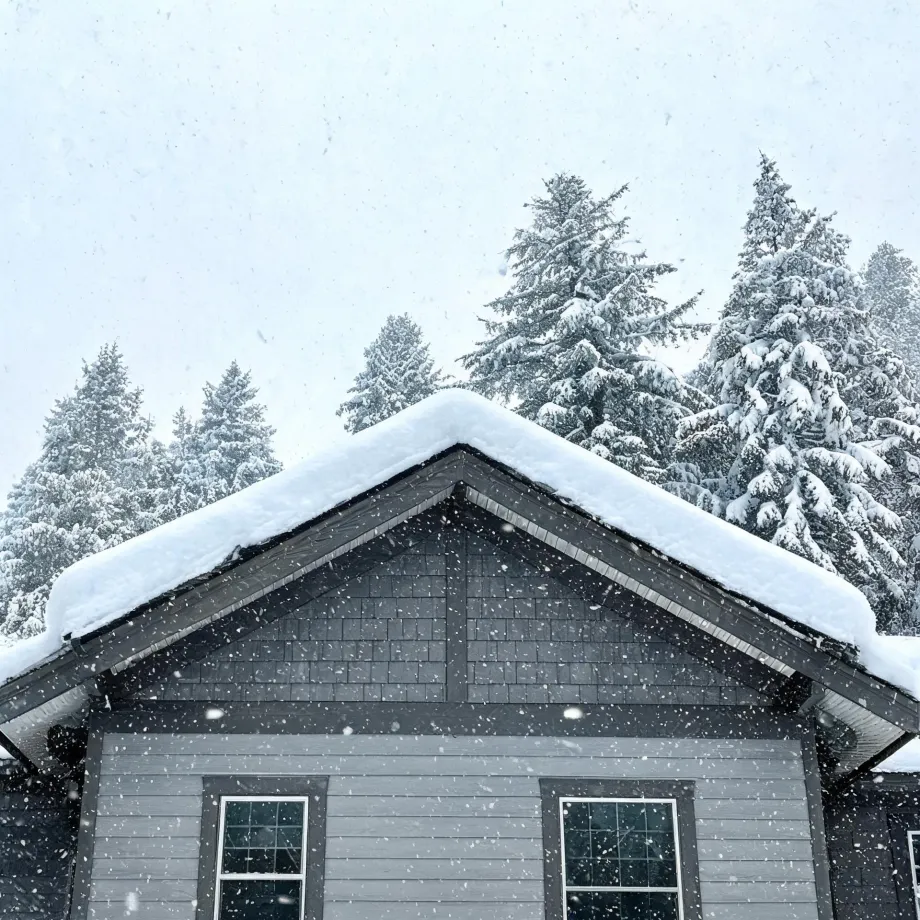
A contractor pricing a heat pump repair in Gallatin County starts with the refrigerant circuit and the reversing valve, because those are the parts that carry the heating load. Homes in Gallatin County, MT run heat about ten months a year, from September through June. Cold outdoor air forces the heat pump to work harder to extract usable heat, and the refrigerant circuit cycles under that strain month after month. By the time a homeowner calls, the reversing valve, the coil, and the compressor contacts have all accumulated the kind of wear that shows up as soft faults first: reduced output, longer run cycles, and eventually a system that cannot keep up on the coldest nights.
Half the homes in Gallatin County, Montana were built in 1998 or earlier (2020-2024 ACS 5-year). For a homeowner scheduling a heat pump repair, that figure matters because the gap between when a house was built and when its heat pump was installed is narrow enough that the equipment a contractor opens is likely to be current enough for parts to still be in circulation. A refrigerant seal, a capacitor, a reversing valve: a contractor here is not routinely hunting for components that have left the supply chain. The building is unlikely to be the source of the problem, and a contractor who finds a failed part can price a repair against a live catalog.
The Parts of a Heat Pump a Contractor Checks First
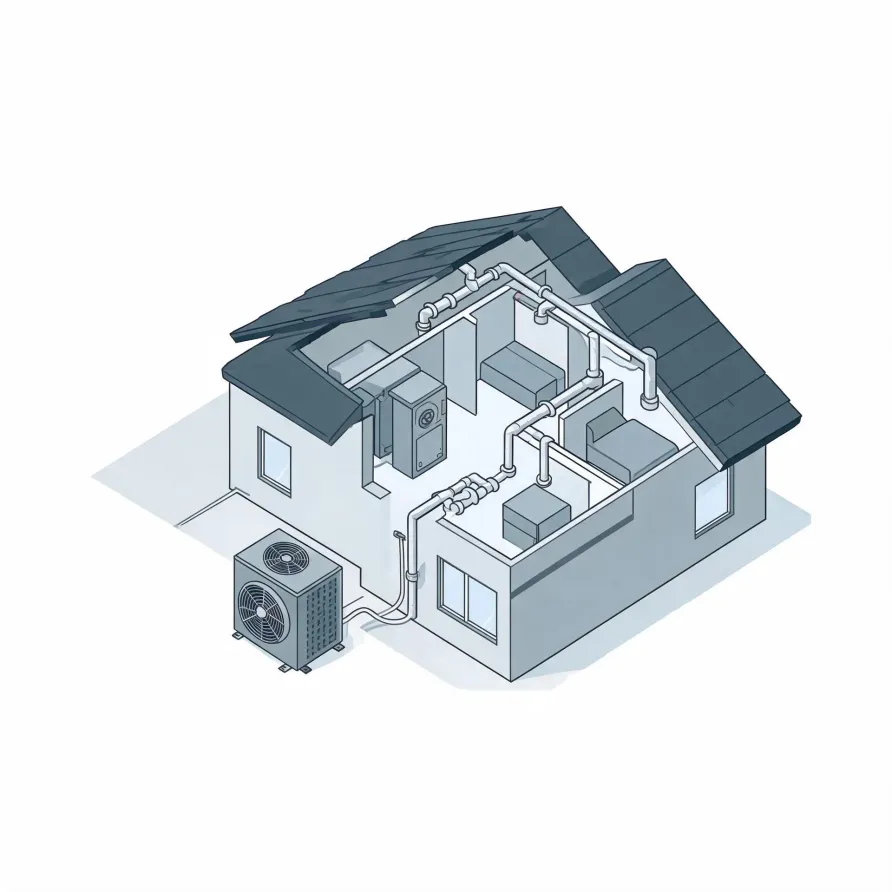
The outdoor unit sits outside the house and holds the compressor and the condenser coil. The compressor is where most repair calls begin. When it fails, the system stops moving heat entirely. The condenser coil sheds or pulls heat depending on the season, and a damaged or dirty coil will push the compressor hard enough to shorten its life.
Inside the house, the air handler holds the evaporator coil and the blower fan. The evaporator coil is where the refrigerant does its work on the air moving through the home. The refrigerant lines connect the two units, and the reversing valve inside the system tells it which direction to run. A contractor also checks the expansion valve and the electrical contactors, since those small components are frequent failure points.
The drawing shows a typical heat pump layout, and a licensed contractor determines which components apply to your specific setup.
Find a contractor in Gallatin CountyGallatin County, by the numbers
229 severe weather events were recorded in Gallatin County, Montana between 2015 and 2024.
NOAA National Centers for Environmental Information, Storm Events Database, bulk CSV export, events 2015-01-01 through 2024-12-31.Half the homes in Gallatin County, Montana were built in 1998 or earlier (2020-2024 ACS 5-year).
U.S. Census Bureau, 2020-2024 American Community Survey 5-Year EstimatesGallatin County, Montana holds 57,568 housing units (2020-2024 ACS 5-year).
U.S. Census Bureau, 2020-2024 American Community Survey 5-Year EstimatesOwners occupy 61.1% of the occupied homes in Gallatin County, Montana (2020-2024 ACS 5-year).
U.S. Census Bureau, 2020-2024 American Community Survey 5-Year EstimatesRepair Rules & Standards for Heat Pumps in Gallatin County, Montana2 sourced rules and standards
Licensing Rules for HVAC Repair in Gallatin County, Montana
Montana’s contractor licence does not reach a casual, minor or inconsequential job whose total price for labour, materials and everything else is less than $2,500 — and the exemption is lost if the work is only part of a larger operation, or if a job is divided up to get under the figure.
Montana requires a current construction contractor licence from the Department of Labor and Industry: an individual or business may not engage in business as a construction contractor without one.
Severe Weather Events in Gallatin County
Montana's climate puts real demands on heat pump systems, and what happens in Gallatin County shapes how hard that equipment works and how often it needs attention. Weather history is part of the repair picture, which is why local contractors account for it.
229 severe weather events, 2015–2024. Source: NOAA National Centers for Environmental Information, Storm Events Database.