Tell us about the job
Takes about a minute. No obligation.
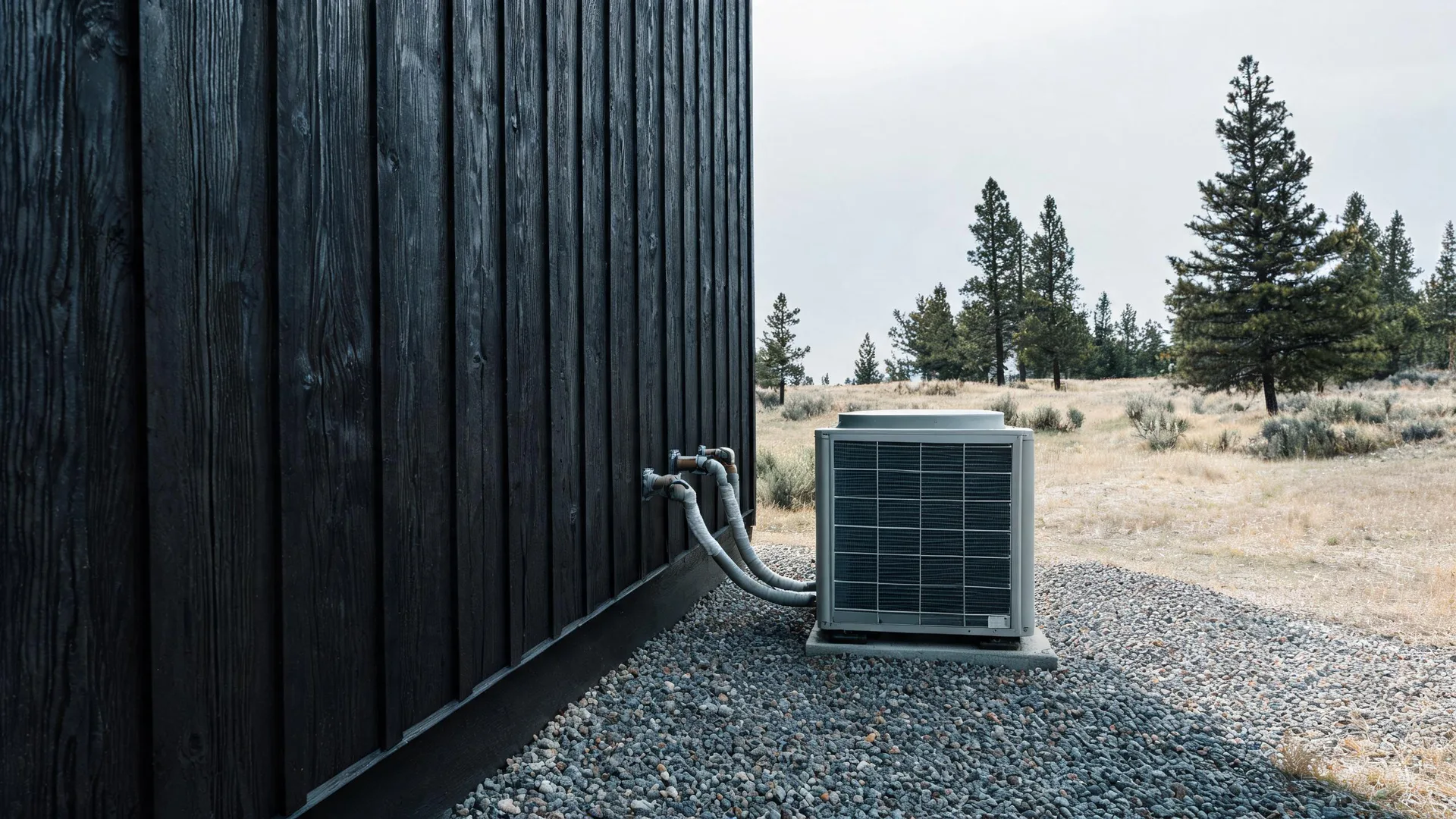
On a repair call here, a contractor starts with the compressor and the reversing valve because those are the components carrying the heaviest cumulative load. Homes in Lewis and Clark County, MT run heat about ten months a year, from September through June. Capacity drops as outdoor temperatures fall, and a heat pump working through a Montana winter cycles harder than the same unit would in a milder climate. A part that was marginal at installation shows up as a failure long before the heating season ends. Refrigerant charge and electrical connections matter, but worn mechanical parts are where a diagnosis usually lands first.
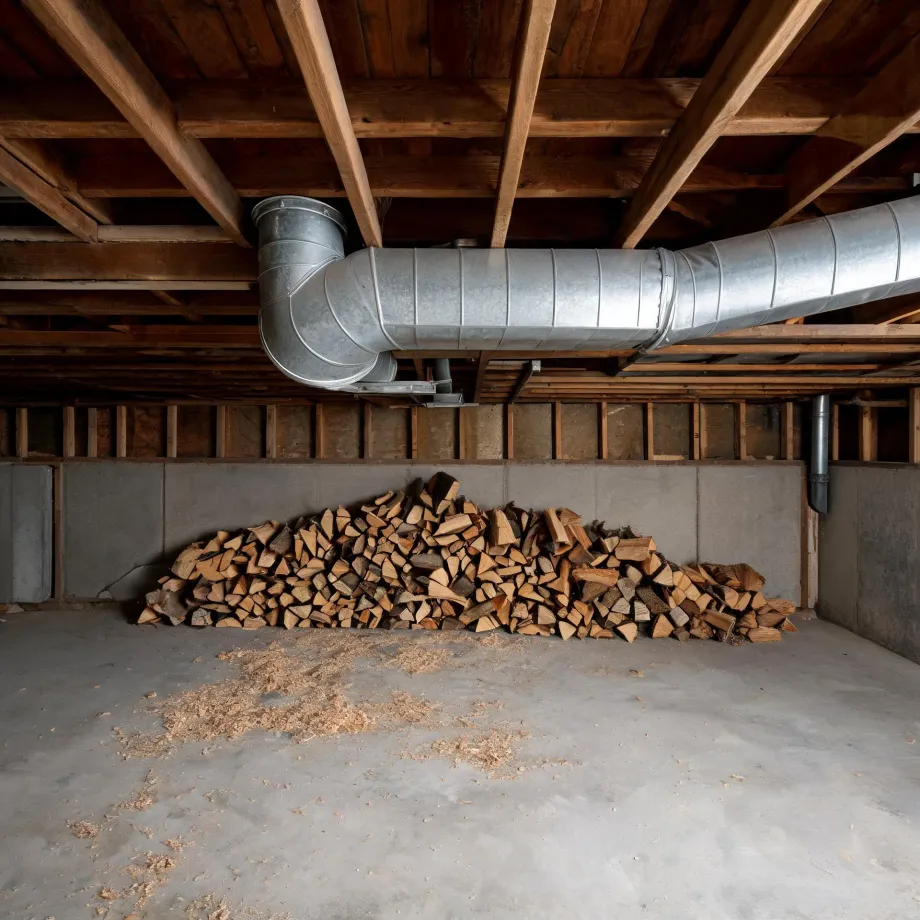
Ductwork and line sets in houses from this era were run for equipment that no longer exists in them, and the paths that wiring now follows were not laid out with a heat pump in mind. Half the homes in Lewis and Clark County, Montana were built in 1982 or earlier (2020-2024 ACS 5-year). When a contractor opens a heat pump in a house like this, what slows the job is often the surrounding infrastructure: a wire gauge that does not match current draw, a line set that was spliced at some earlier service call, or a control wire whose routing makes sensor faults hard to isolate. The equipment itself may be straightforward to diagnose; what the house has done to the system around it is the variable that changes the scope.
The Parts of a Heat Pump a Contractor Checks During Repair
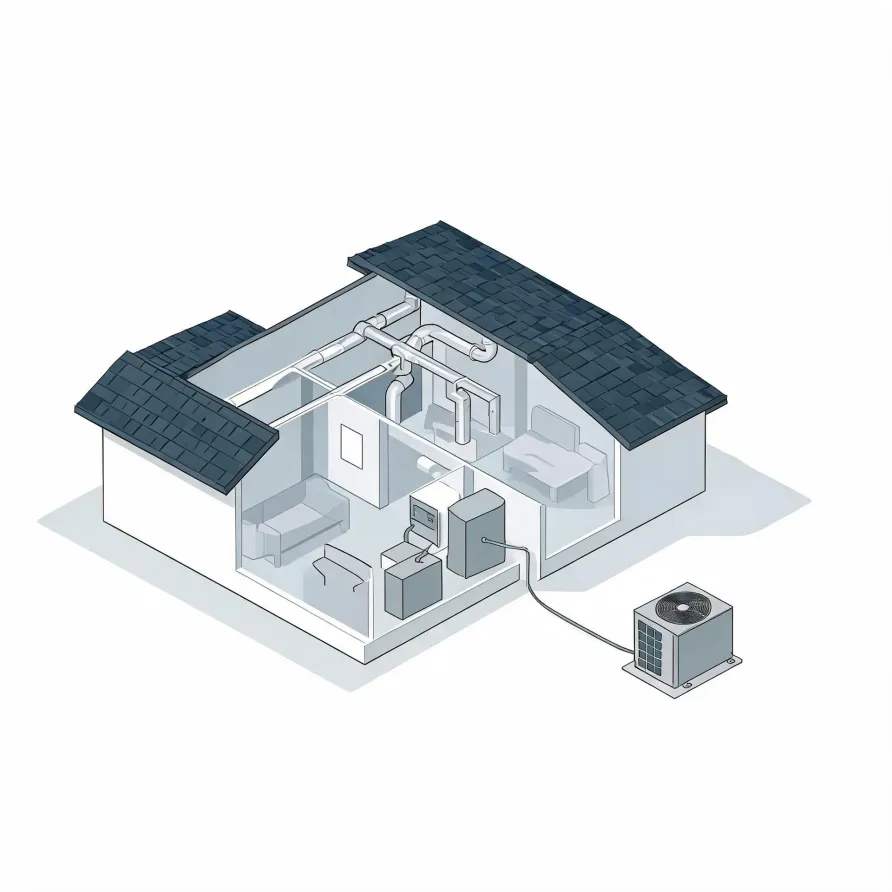
The outdoor unit is the piece most homeowners recognize first, sitting on a pad beside the house. Inside it are the compressor and the condenser coil, and either one can be the source of a breakdown. The air handler, mounted indoors in a closet or utility space, holds the indoor coil and the blower that moves conditioned air through the home.
The refrigerant lines run between the two units, carrying the working fluid that makes the whole system function. A contractor also checks the reversing valve, which sits inside the outdoor unit and is specific to heat pumps, along with the expansion device and the capacitors that help the motors start and run.
The drawing shows a typical layout, and a licensed contractor determines which components and conditions apply to your specific house.
Find a contractor in Lewis and Clark CountyLewis and Clark County, by the numbers
245 severe weather events were recorded in Lewis and Clark County, Montana between 2015 and 2024.
NOAA National Centers for Environmental Information, Storm Events Database, bulk CSV export, events 2015-01-01 through 2024-12-31.Half the homes in Lewis and Clark County, Montana were built in 1982 or earlier (2020-2024 ACS 5-year).
U.S. Census Bureau, 2020-2024 American Community Survey 5-Year EstimatesLewis and Clark County, Montana holds 34,082 housing units (2020-2024 ACS 5-year).
U.S. Census Bureau, 2020-2024 American Community Survey 5-Year EstimatesOwners occupy 70.1% of the occupied homes in Lewis and Clark County, Montana (2020-2024 ACS 5-year).
U.S. Census Bureau, 2020-2024 American Community Survey 5-Year EstimatesRules & Standards Governing Heat Pump Repair in Lewis and Clark County, Montana2 sourced rules and standards
Licensing Rules for HVAC Repair in Lewis and Clark County, Montana
Montana’s contractor licence does not reach a casual, minor or inconsequential job whose total price for labour, materials and everything else is less than $2,500 — and the exemption is lost if the work is only part of a larger operation, or if a job is divided up to get under the figure.
Montana requires a current construction contractor licence from the Department of Labor and Industry: an individual or business may not engage in business as a construction contractor without one.
Severe Weather Events in Lewis and Clark County, Year by Year
Extreme weather puts heat pumps under stress, and how hard a system works over its lifetime depends heavily on what the local climate throws at it. Repair needs in Lewis and Clark County are shaped by that local load, which is why the weather record belongs alongside the service information.
245 severe weather events, 2016–2024. Source: NOAA National Centers for Environmental Information, Storm Events Database.