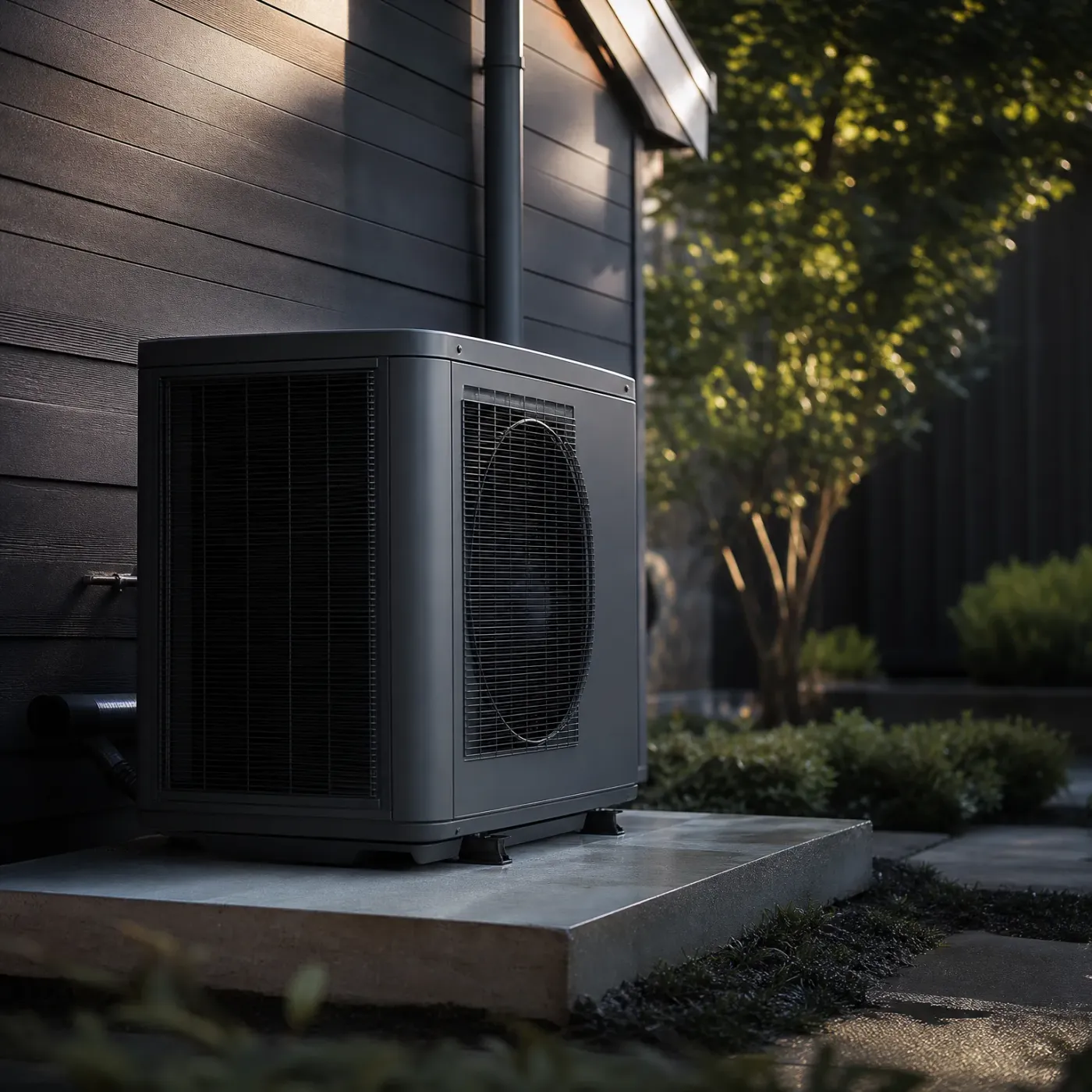

A gray outdoor condenser/heat pump unit with a side fan grille sits on a concrete pad beside a dark horizontal wood-sided house, with shrubs and a small tree nearby.

No quotes to chase

Is a cold-climate heat pump worth it in Montana

Most homes in Montana heat with gas, so a cold-climate heat pump is doing a job your furnace used to do, through winters that get genuinely cold. This page gets into how that heat pump holds up, what it means for a gas-heated house, and where it stands against the dry summer heat too. Skip calling around and explaining your setup more than once; a local contractor who installs these year-round can look at what you've got.

Skip the calls

A cold-climate heat pump can hold up in Montana, but it's working against real cold here, not a mild dip. These units are built to keep pulling heat from outside air well below zero, where older heat pumps gave up. In most Montana homes, the furnace is still there as backup for the coldest stretches of the night, and that pairing is normal, not a sign the heat pump failed. Since most homes here already heat with gas, the heat pump is taking over part of that job rather than replacing it outright, and it earns its keep in summer too, running the air conditioning through the hot, dry months. Whether it's worth it for you depends on how the unit is sized and installed for your house, more than on the brand or the rating on the box.

A gray outdoor condenser unit on a concrete pad beside a light-colored horizontal-siding house, with a disconnect box and refrigerant line on the wall, ornamental grasses and a shrub in mulch nearby, and a concrete patio in the foreground.

Running the way it should

A cold-climate heat pump on its pad, lines tight to the disconnect, handles a Montana winter day without strain. It pulls heat out of cold air and the house stays warm, with the gas furnace backing it up when it gets too cold for the heat pump to keep up on its own.


An outdoor air conditioning condenser unit on a concrete pad beside a house with horizontal lap siding, with a green shrub to the left and a wide concrete slab in the foreground.

Struggling against the cold

Set against bare concrete with nothing around it, a heat pump working too hard shows it fast: longer run times, ice that doesn't clear, or a house that never quite reaches the temperature you set. That's a sign it was sized wrong or installed without accounting for how cold it gets here.

Heat Pump or Furnace: Who Carries Winter

Keep the heat pump running the furnace

  • The heat pump handles most of the heating load and the furnace only kicks in once it drops below the point where the heat pump stops keeping up.
  • Power here is cheap, so running the heat pump for most of the winter costs less than leaning on the gas furnace for all of it.
  • A cold-climate heat pump still pulls heat from outside air well below zero, which is what lets it carry the load most of the season instead of just shoulder months.
  • In summer the same unit runs the air conditioning, so it's doing double duty instead of sitting idle from October to April.
  • The furnace still gets used on the coldest nights, so it doesn't sit unused long enough to cause its own problems.

Switch over to the furnace for winter

  • Below a certain outdoor temperature, a heat pump's output drops enough that the furnace puts out more heat for the same runtime.
  • Most Montana homes already have the gas line and ductwork sized for the furnace, so switching over doesn't ask anything new of the house.
  • Gas is what already heats most homes in Montana, so during the hardest cold the furnace is doing the job it was always there for.
  • Letting the furnace carry the coldest stretch means the heat pump isn't working at the edge of what it can pull from the air outside.
  • A thermostat or control board set up wrong can hand off between the two at the wrong temperature, so that changeover point needs to be set correctly.
A gray-haired man in a dark long-sleeve shirt sits on a gray sofa in a living room, looking toward a sunlit window with sheer curtains.
A gray-haired man in a dark green sweatshirt sits on a sofa in a living room, looking toward a bright window, with a houseplant, lamp, fireplace and framed art behind him.
A gray-haired bearded man in a dark green collared sweater sits on a sofa in a living room with a window, houseplant, floor lamp and bookshelves, looking off to the side.
A gray-haired man in a dark green sweater sits on a sofa in a sunlit living room, looking off to the side, with a framed landscape painting, dining table and shelving behind him.

Skip the calls to every shop

Your request stays with one local pro.

Sending the form costs nothing.

What the compressor is doing

A cold-climate heat pump uses a variable-speed compressor that ramps up as the outside temperature drops, instead of just switching on and off like older units. That's what lets it keep pulling heat out of the air on a day when a standard heat pump would have quit already. It also has a larger coil and a different refrigerant charge built for pulling heat from cold air, not just moving heat in a hot climate. None of that matters if the charge is wrong or the coil is undersized for your house, which is why the install itself decides how it performs.

Where the switchover point lands

Every cold-climate heat pump has a balance point, the outside temperature where it can no longer keep up and the furnace needs to take over. That number comes from how the unit is sized against your house, not a fixed spec on the box. Set it too high and the furnace runs more than it needs to. Set it too low and the heat pump struggles on the coldest days instead of handing off. A contractor who installs these through a Montana winter sets that point from how the house actually loses heat, not a guess.

An outdoor air conditioner condenser unit on a concrete pad beside a house with beige vinyl siding, with a gray electrical disconnect box and insulated refrigerant lines on the wall and river rock to the right.
Before you get your heat pump installation
A gray outdoor condenser unit on a concrete pad beside a light green lap-sided house, with a wall-mounted electrical disconnect box, mulch bed with shrubs, river rock, and a paved walkway in the foreground.
After you get your heat pump installation

If the switchover point is set wrong, your furnace sits idle on a day it should be carrying the load, and the heat pump labors in cold it was never meant to handle alone.

Get that handoff right and you barely notice it happen. Power stays cheap, the gas furnace steps in exactly when the air outside gets too cold for the heat pump, and the house holds its temperature through it.

A middle-aged woman with shoulder-length dark hair, wearing a gray cardigan over a cream top, sits in an upholstered armchair and looks toward a sunlit window, with a shelf holding framed pictures and a plant behind her.
A woman with dark hair in a bun sits wrapped in a chunky knit blanket on a couch with a child resting his head on her shoulder, eyes closed, beside a lit lamp and bookshelf indoors.

Installed and set up right

A local contractor sizes the heat pump to your house, sets the switchover point correctly, and knows what tends to fail on this equipment after a Montana winter.

Get one local pro

Installed without that

The switchover point gets guessed at or left on a default, so the furnace and heat pump don't hand off the load the way your house actually needs them to.

Get one local pro

Power costs 12.99 cents per kilowatt-hour statewide

At under 13 cents a kilowatt-hour, running your heat pump through most of a Montana winter won't strain your power bill the way it might in a state paying twice that. That's part of why leaning on it ahead of the furnace makes sense here.

EIA-861 2025 statewide residential average

  1. Outdoor air passes over a cold refrigerant coil

  2. Refrigerant absorbs heat even from near-zero air

  3. The compressor raises that refrigerant to a higher pressure and temperature

  4. Indoor coil releases the heat into air circulated through your ducts

A closed silver laptop and a white cup of coffee on a saucer sit on a wooden table in front of a wooden chair, a plain beige wall, a potted leafy plant and a window with greenery outside.

A cold-climate heat pump is worth it here, if it's set up right

A cold-climate heat pump holds up in Montana because it's built for real cold, not a mild dip, and with cheap power here it makes sense to lean on it ahead of the furnace. Where it earns that is in the setup: the unit sized to your house, the switchover point set where it should be, the furnace left to back it up instead of fight it. Get that wrong and you're paying for equipment that isn't doing the job it was bought to do.

That's the part worth getting right the first time, and it's also the part that takes the most work to sort out on your own, calling around to find someone who actually knows this equipment, explaining your house and your furnace setup more than once, trying to tell apart quotes that all sound reasonable on paper. A contractor local to Montana who works on these systems every winter already knows what tends to go wrong with them here and what a correct setup looks like for your house.

A gray upholstered sofa with a beige cushion and knit blanket beside a curtained window, with a white mug and a book on a dark wooden table in the foreground and a lit lamp in the background.
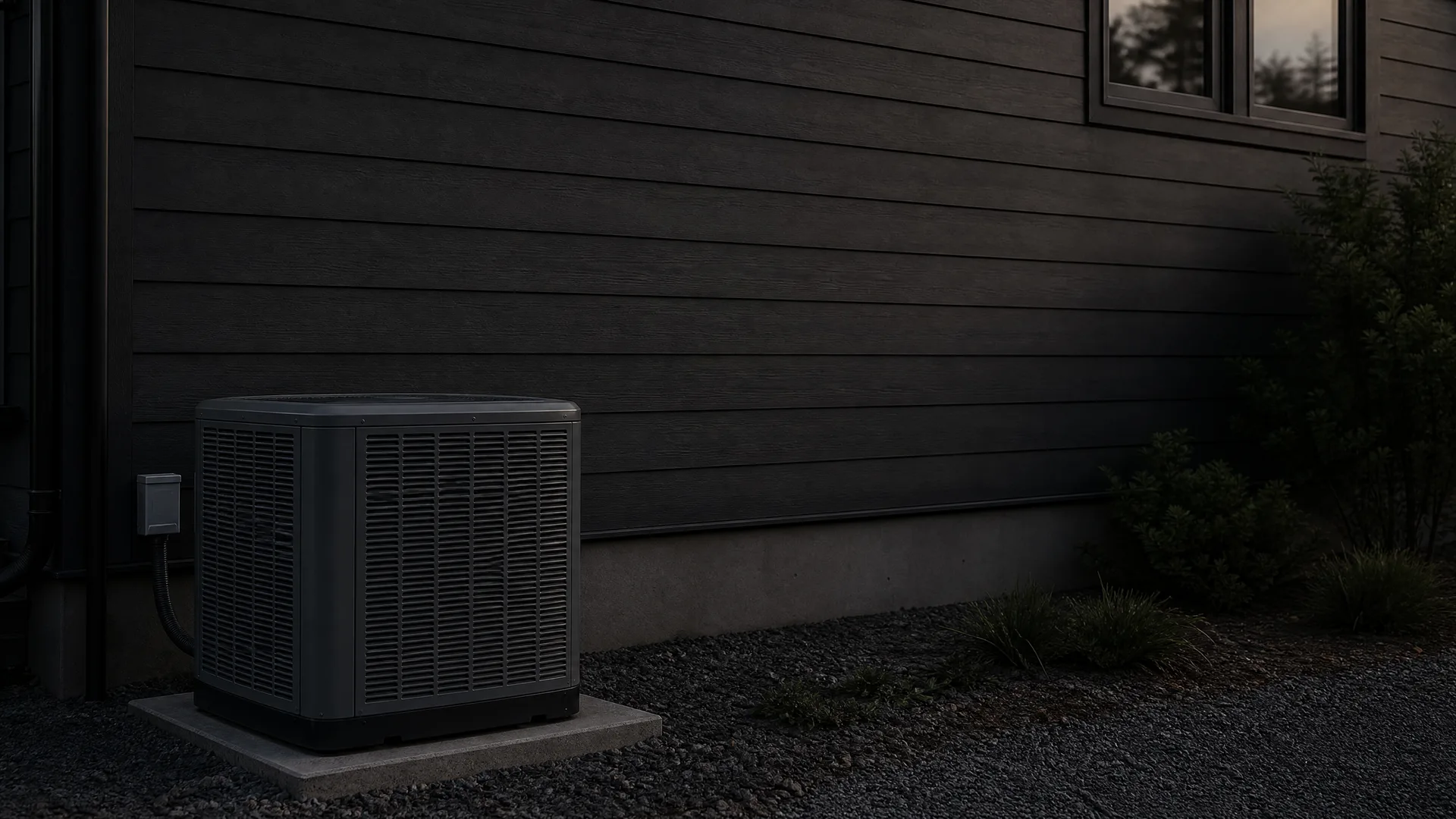
An outdoor condenser unit on a concrete pad beside a dark horizontal-lap-sided house, with gravel, shrubs and a small electrical disconnect box on the wall, in dim light.

Describe it once

One installer gets your project, so there's no bidding war over it.

Step 1 of 3: Equipment