Defrost doing its job
The coil gets a thin coat of frost, the unit pauses, steam lifts off for a few minutes, then it goes back to heating. The fan outside stops, the cycle ends, and the vents warm back up on their own.

Montana winters push heat pumps hard, and it can be unsettling to look outside and see the outdoor unit puffing steam while cold air blows from the vents. It looks like something has gone wrong, especially on a cold night when you need the heat running right. Most of the time there's a straightforward reason tied to how the unit handles frost in cold weather.
Cold, damp air causes frost to build on the outdoor unit's coil. When that happens, the heat pump switches briefly into defrost mode. It reverses itself to send warm refrigerant outside to melt the ice, which is why the outdoor unit steams. While it does that, it can't send heat inside, so the indoor fan either shuts off or blows cool air for a few minutes. In Montana, where winter nights run cold for months, this can happen several times a day once temperatures drop low enough for frost to form easily. It should end on its own within ten to fifteen minutes. If the cold air lasts much longer than that, or the unit stays in defrost without finishing, something in the defrost control or sensor likely needs a look.




You're sitting in the living room on a cold Montana evening and the vents start pushing air that feels cooler than the room. The outdoor unit is steaming or has a layer of frost creeping over the coil. Your first thought is that the heat pump has quit on you in the worst possible month. Most of the time this is the defrost cycle doing its job, melting ice off the outdoor coil so the system can keep pulling heat from the outside air. It runs for a few minutes, then switches back. If it happens once in a while, that's normal. If the outdoor unit stays frosted, or the cold air blowing inside lasts well past a few minutes, the system isn't finishing its job, and your gas backup heat may end up carrying more of the load than it should.

The coil gets a thin coat of frost, the unit pauses, steam lifts off for a few minutes, then it goes back to heating. The fan outside stops, the cycle ends, and the vents warm back up on their own.

Frost keeps building instead of clearing, or the unit cycles into defrost over and over without finishing the job. If the outdoor coil stays iced over and the air inside stays cold, something in that cycle isn't working right.

A heat pump moves heat from outside air into your house, even when it's cold out. To do that, the outdoor coil runs colder than the air around it, and moisture in the air freezes onto it. A control board tracks either the coil temperature or how long the system has been running, and when it hits a set point, it reverses the reversing valve. For a few minutes, the unit runs like an air conditioner in reverse: it sends hot refrigerant to the outdoor coil to melt the frost off, which is why steam rises off the cabinet. The outdoor fan shuts off during this so it doesn't blow cold air onto the coil while it's trying to warm up. Inside, the air handler keeps running, which is why you feel that cool draft from the vents.
That sequence should take a few minutes and then switch back to heating on its own. If a thermostat or sensor is reading wrong, or a valve is sticking, the board can call for defrost when the coil doesn't need it, or hold the unit there longer than it should. A contractor who works on your model knows which sensor or board behavior to check first, and once you're matched with one, sorting out which part is misreading isn't something you have to figure out yourself.


This is a heat pump running normal in cold weather. The coil stays clean, the lines run steady to the disconnect, and the fan outside cycles on its own schedule. If yours looks like this and the air inside still feels warm after a defrost cycle ends, nothing here needs attention.

Frost sitting heavy on the coil, ice building past the lines, or the unit running loud and long without a break points to a defrost cycle that isn't finishing. Left alone through a Montana winter, that strain on the unit tends to get worse, not better.
Frost builds on the outdoor coil as heat is pulled from cold air.
A sensor or timer tells the control board frost has built up.
The reversing valve switches so hot refrigerant flows outdoors instead.
The outdoor fan shuts off while the coil heats up and sheds frost.



After you send the request, you're done searching.
Describe your heat pump job, and a local pro who handles it gets in touch.
You only hire the pro if you want to.


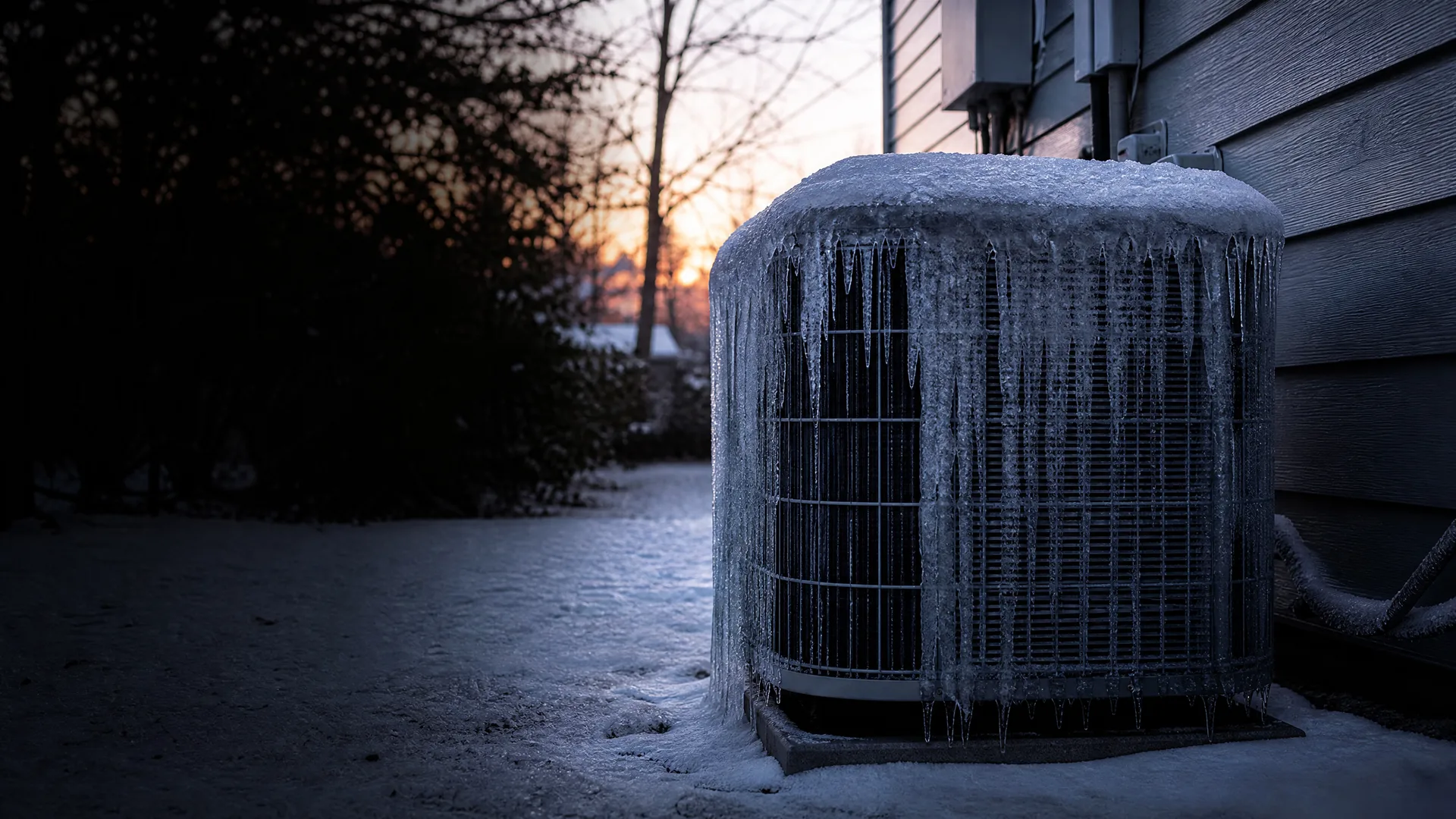
Six in the morning, still dark, and you go out for the mail before work. The side yard is quiet except for the unit. It's wearing ice like a glove, thick over the coil and down past the seams on the sides. No steam this time, no fan turning, just that white coating catching the porch light. You touch the top panel and your glove sticks for a second. Inside, the vents have been running cool air for a while now, and the thermostat still reads three degrees under where you set it. You stand there a minute in the cold, looking at it, then go back in to find a sweater before the drive.
At 12.99 cents a kilowatt-hour, running your heat pump's outdoor fan and compressor through a defrost cycle costs very little. A unit that short-cycles into defrost over and over isn't draining your wallet the way it would somewhere with pricier power, but it's still a sign the system needs a look.
EIA-861 2025 statewide residential average
A normal defrost cycle runs for a few minutes every so often and shuts off on its own once the coil clears. The outdoor fan stops, steam clears, and the unit goes back to pulling heat into your house.
A control board that's lost track of the coil's temperature can leave the unit stuck in defrost, heating the outdoor coil with nowhere to send that warmth but outside. A tech checks the sensor and the board, not the fan or the steam.



Summers in Montana run hot and dry, and the air shows it. Averaged over June, July and August, the dew point here sits around 44°F, light enough that sweat dries fast and the air never feels heavy. That matters for your heat pump once fall turns to winter. Dry air holds less moisture to begin with, so the frost that builds on the outdoor coil during defrost mode tends to form slower and lighter than it would somewhere muggy. You'll still see steam lift off the unit on cold mornings, and the fan will still pause while it clears. It just shouldn't be fighting a heavy, wet buildup to do it. Source: NOAA climate normals for Montana.
NASA POWER T2MDEW county cells weighted by homes
Defrost mode is the heat pump clearing frost off the outdoor coil so it can keep pulling heat into your house. A few minutes of steam and cool air from the vents, then it switches back and warms up again, that's normal for a Montana winter. What isn't normal is a cycle that keeps running, a coil that frosts back up in minutes, or a fan outside that never turns. If that's what you're seeing, the unit isn't resting, something in it has lost track of what it's supposed to be doing. You don't need to figure out which part it is. Send the details in and the search for someone qualified to look at it is no longer on your plate. That's one less thing to carry through a cold stretch, and it's handled by someone who works on these in Montana winters, not left for you to sort out between now and when the house gets uncomfortable.
Asking costs nothing, and the choice to hire stays yours.
A heat pump stuck cycling in and out of defrost on a cold Montana night won't catch up on its own, and the longer it runs that way the more ice builds on the coil. Sending the request now means a contractor already has the details before they call, so the fix starts sooner instead of waiting on another cold morning.