Tell us about the job
Takes about a minute. No obligation.
Sizing a heat pump for Flathead County means accounting for what happens at the cold end of the heating season, when outdoor temperatures drop and the unit's capacity falls with them. Homes in Flathead County, MT run heat about eleven months a year, from August through June. A contractor has to establish the heating load the house actually puts on the system before they can specify backup resistance or a dual-fuel setup, because an undersized heat pump will run at a deficit through the coldest weeks rather than just the coldest days. The compressor and the reversing valve carry that load through a long stretch with little off time, so installation quality and correct sizing show up in the equipment's condition sooner than they would in a milder climate.
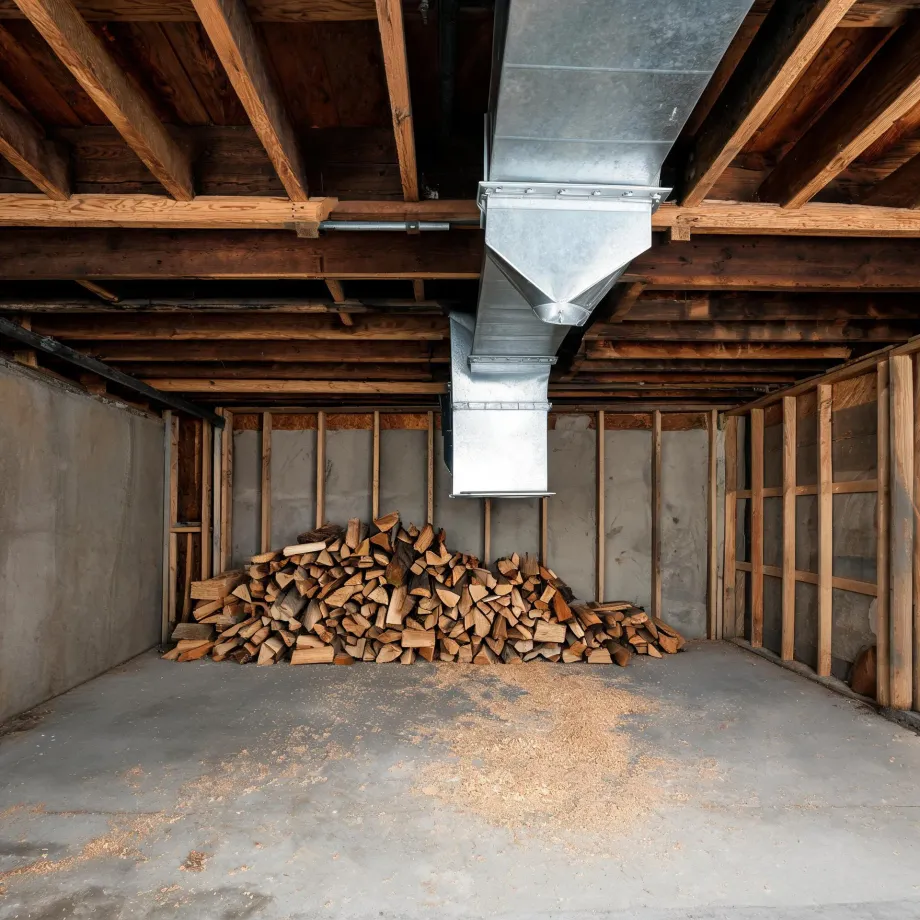
Ductwork laid in for a furnace and central air decades before heat pumps became common was designed around a different kind of airflow, different static pressure, and a different seasonal load. Half the homes in Flathead County, Montana were built in 1991 or earlier (2020-2024 ACS 5-year). A contractor pricing a heat pump installation here checks whether the existing trunk lines and branch runs can move the volume a heat pump needs, and in many houses the answer changes the scope and the quote. Electrical service is the second variable: the panel has to carry the new unit's draw, and a service that was adequate for what the house had is not always adequate for what goes in next.
What Gets Installed With a New Heat Pump
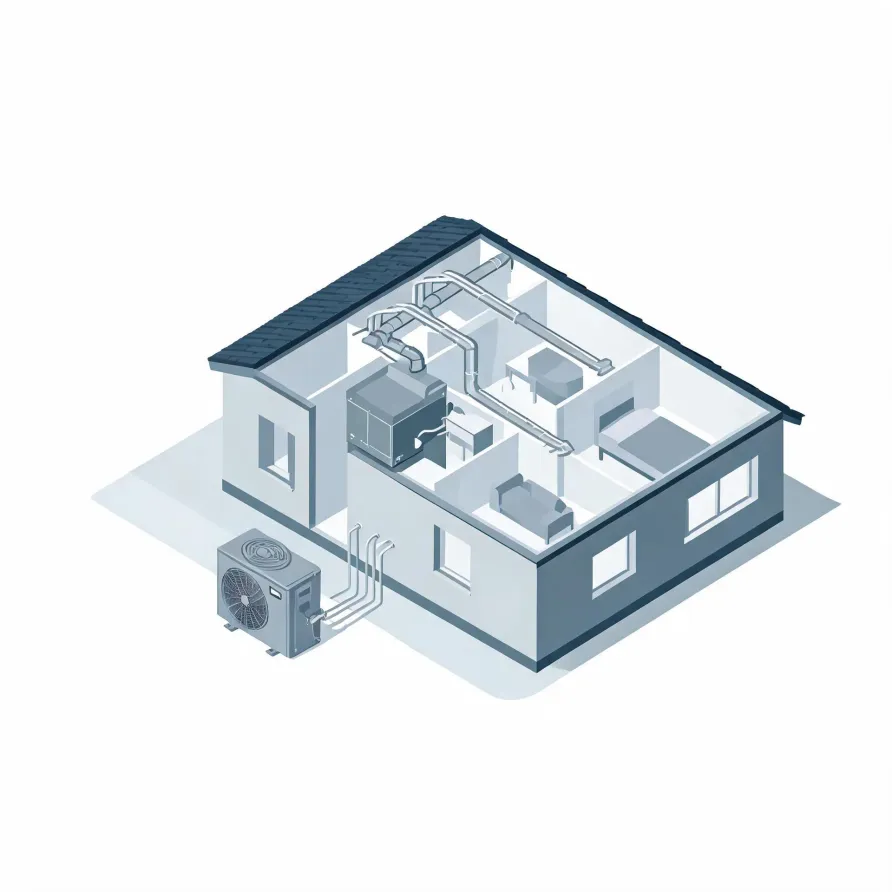
The outdoor unit is the piece a homeowner sees first, mounted on a concrete pad or wall bracket beside the house, and it holds the compressor and the outdoor coil. Inside, the air handler sits in a utility space, closet, or attic and moves conditioned air through the home. These two units are the core of what a contractor installs.
A refrigerant line set runs between the outdoor unit and the air handler, connecting the two through a small penetration in the wall. The thermostat goes on an interior wall and gives the homeowner control over the whole system. A condensate drain line carries moisture away from the air handler to a nearby drain.
The drawing shows a general layout of these components, and a licensed contractor determines exactly how each one fits the conditions of your specific house.
Find a contractor in Flathead CountyFlathead County, by the numbers
205 severe weather events were recorded in Flathead County, Montana between 2015 and 2024.
NOAA National Centers for Environmental Information, Storm Events Database, bulk CSV export, events 2015-01-01 through 2024-12-31.Half the homes in Flathead County, Montana were built in 1991 or earlier (2020-2024 ACS 5-year).
U.S. Census Bureau, 2020-2024 American Community Survey 5-Year EstimatesFlathead County, Montana holds 51,680 housing units (2020-2024 ACS 5-year).
U.S. Census Bureau, 2020-2024 American Community Survey 5-Year EstimatesOwners occupy 72.4% of the occupied homes in Flathead County, Montana (2020-2024 ACS 5-year).
U.S. Census Bureau, 2020-2024 American Community Survey 5-Year EstimatesHeat Pump Installation Rules for Flathead County, Montana2 codes, standards, and statutes
Licensing and Legal Requirements in Flathead County, Montana
Montana’s contractor licence does not reach a casual, minor or inconsequential job whose total price for labour, materials and everything else is less than $2,500 — and the exemption is lost if the work is only part of a larger operation, or if a job is divided up to get under the figure.
Montana requires a current construction contractor licence from the Department of Labor and Industry: an individual or business may not engage in business as a construction contractor without one.
Severe Weather Events in Flathead County
Weather in Flathead County puts a direct load on heating and cooling equipment, and that load shapes what a heat pump needs to handle year after year. Sizing and installation decisions here are local decisions, grounded in what the climate actually asks of the system.
205 severe weather events, 2015–2024. Source: NOAA National Centers for Environmental Information, Storm Events Database.